October 1, 2026
Today's resurgence in U.S. imperialist interventions abroad and the concomitant so-called crisis of the "rules-based order" can be explained, Luís Eduardo Fernandes argues, through the category of "legal imperialism, which refers to how the international juridical form is internalized within societies and in the context of dependency, colonialism, unequal exchange, and monopoly capital. "International law and imperialism," Fernandes writes, "do not stand as opposing poles. They are part of the same unity.… Violence is constitutive of the juridical form."
September 1, 2026
Paul Buhle reviews
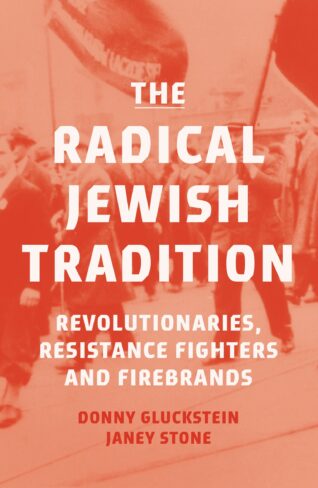
The Radical Jewish Tradition by Donny Gluckstein and Janey Stone. The book, Buhle writes, is a window onto "the antinomies of nineteenth-century Jewish life"—including the growing movement against Zionism and for socialism among Eastern European Jews. This authors, Buhle notes, also tells the story of Jewish communists in Britain, the United States, and beyond, taking into account the wide sweep of Jewish left activity globally, situating the present struggles against genocide in Palestine squarely within the legacy of radical Jews everywhere.
May 1, 2026
John Bellamy Foster takes on sweeping questions of artificial intelligence and its role in today's capitalist society. "The Great Houses of AI are divided against themselves and cannot stand," he writes, "If humanity is to flourish, the forces and relations of production must be revolutionized together…creating a world of sustainable human development."
May 1, 2026
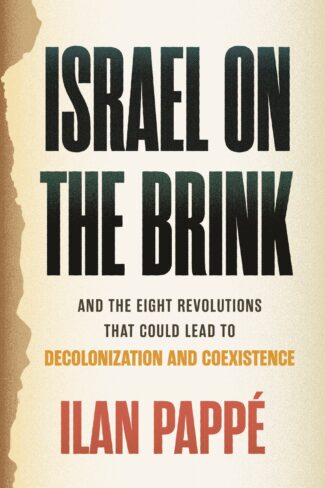
In this review of Ilan Pappé's
Israel on the Brink, Tom Mayer considers the famed historian's assessment of the increasingly precarious Zionist state. In the book, Mayer writes, readers will find a thoughtful consideration of the past, present, and potential events that could shape a new vision for Palestine.
April 1, 2026
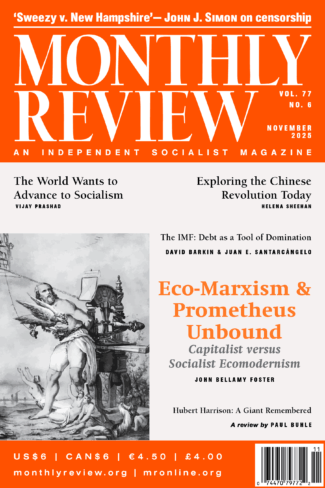
While the "world is rapidly approaching tipping points that spell irreversible and catastrophic climate change," write The Editors, "we are not seeing the necessary turn from ecological reform to ecological revolution, but rather the rise of ecological reaction.… An absolute no-quarters war from above is now being waged against all political attempts to address climate change." This attack is epitomized by "the Donald Trump administration's goal of removing the 2009 Endangerment Finding of the Clean Air Act that underlies all national climate legislation in the United States." While this tactic is unlikely to succeed, the proliferation of similar attacks clearly demonstrate that "[m]onopoly-finance capital has now abandoned the energy transition, which was its only answer to climate change."
March 1, 2026
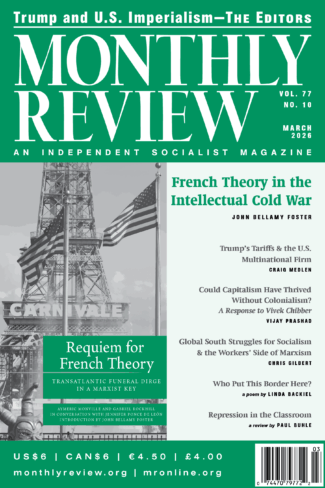
"To make sense of present developments,"
MR editors write in this month's "Notes from the Editors," "it is essential to understand the dialectic of continuity and change in U.S. imperial grand strategy." By charting the evolution from post-Second World War dominance to the collapse of the Soviet Union and the eventual demise of the "Unipolar Moment," the Editors tie the reactionary impulses of MAGA to the raw shows of imperial force driven by Trump's policies.
March 1, 2026
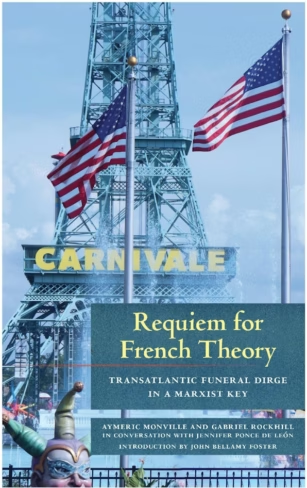
In 1966, Johns Hopkins hosted a seemingly innocuous international conference titled "The Languages of Criticism and the Sciences of Man," featuring leading figures of what would later be known as "French Theory." However, John Bellamy Foster writes, far from a simple meeting of intellectuals, this represented a "politically motivated attempt to create a beachhead for French structuralism in the United States that would counter the radicalization then taking place."
December 1, 2025
Writing upon the fiftieth anniversary of his graduation from Pomfret School in Connecticut, Robert W. Chesney shares in his own words the story of his intellectual development, from his teen years through his studies at The Evergreen State College, and how they shaped his career as a journalist and activist—including his role as coeditor of
MR.
November 1, 2025
It is a commonplace that the world in the first quarter of the twenty-first century is facing multiple, multifaceted crises, threatening all world civilization and the future of humanity itself. So omnipresent is the contemporary world disorder that received ideology has settled on a single word to describe it: “polycrisis.” Anyone who wants to know what polycrisis is and where it comes from will inevitably run up against a blank wall. For the establishment, the vacuousness of the concept of polycrisis is its primary value.
June 1, 2025
In this excerpt from John Bellamy Foster's
Trump in the White House (Monthly Review Press, 2017), Foster expands on the concept, origins, and practical effects of
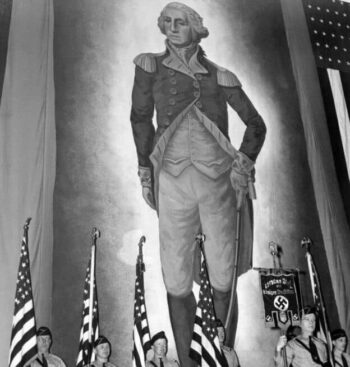
Gleichschaltung (falling into line) in Nazi Germany and its relevance today. As Foster writes "to put such a neo-fascist strategy in place requires a new kind of
Gleichschaltung"; one in which all of society—from the judiciary to Congress to cultural and media institutions—are brought into line.