July 1, 2020
COVID-19 is a great revealer, laying bare the structures of racial disposability that have sacrificed people, from migrant detainees to meat packers. We are also witness to the rise of anti-Asian violence. Brutal attacks against Asian Americans have exposed the fraudulence of the model minority myth and the assimilationist paradigm that legitimizes state violence against Black and Brown bodies.
May 1, 2020
In its wider economic, ecological, epidemiological, and public health context, the current COVID-19 pandemic demonstrates the enormous dangers of the metabolic rift in human ecology and epidemiology brought on by capitalist social relations in the age of monopoly-finance capital, global agribusiness, and intricate, globe-spanning supply chains associated with the extreme exploitation and expropriation of both human beings and nature. Neoliberalism, representing the inner logic of capitalism, has left the world vulnerable to catastrophe wherever it has come into play.
May 1, 2020
COVID-19, the illness caused by coronavirus SARS-CoV-2, the second severe acute respiratory syndrome virus since 2002, is now officially a pandemic. As of late March, whole cities are sheltered in place and, one by one, hospitals are lighting up in medical gridlock brought about by surges in patients.
May 1, 2020
Hilary Rose, a sociologist, and Steven Rose, a neuroscientist, were two of the principal founders of the British Society for Social Responsibility in Science in the late 1960s in London. They speak about their work as scientists and antiwar activists, particularly around the issue of Palestinian liberation.
April 1, 2020
Karl Marx's (and Frederick Engels's) analysis of nineteenth-century Irish history revealed what is referred to as "the rift of Éire" in the colonial period. Indeed, it is in relation to the analysis of the systematic disruption of the Irish environment that Marx's ecological inquiries can be seen as taking on a concrete and developed form, encompassing the ecological as well as economic robbery that characterized the Irish colonial regime.
February 1, 2020
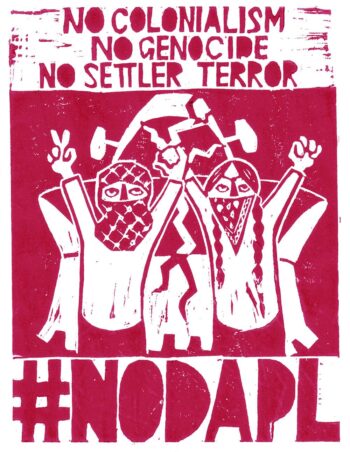
The "turn toward the indigenous" in social theory in the last couple of decades, associated with the critique of white settler colonialism, has reintroduced themes long present in Marxian theory, but in ways that are often surprisingly divorced from Karl Marx's critique of capitalism, colonialism, and imperialism.

December 1, 2019
Bloomberg insists that we need to get our priorities straight: the economy comes before the earth, capitalism before nature. Yet, from any sort of realistic, world-wise perspective, it is clear that we are faced with two immense, imminent, and irreversible crises, one threatening within as short a time as a year to destabilize the world capitalist economy, the other promising to destroy the planet as a home to humanity, destabilizing industrial civilization and undermining the survival chances of hundreds of millions or even billions of people this century. Both represent the culmination of capitalist contradictions over centuries of development and both point to the need to transform society in revolutionary ways. It is the coevolution of economic and ecological contradictions under global monopoly-finance capital that defines the epochal historical crisis of our times. In this new issue of Monthly Review, we also celebrate Monthly Review's relationship with the annual School of Ecology in Mauritius.
December 1, 2019
Historical capitalism cannot be understood aside from its existence as a colonial/imperialist world system in which the violent exercise of power is an ever-present reality. In order to uncover the material conditions governing concrete capitalism, including its interface with land, nonwage labor, and corporeal life, it is therefore necessary to go beyond the inner reality of exploitation, and address expropriation, or the process of appropriation without equivalent (or without reciprocity) through which capital has sought to determine its wider parameters.
December 1, 2019
Free Public Transit: And Why We Don't Pay to Ride Elevators, edited by Judith Dellheim and Jason Prince, gives readers a distinctive blend of the visionary and the practical. It surprises us with rarely publicized instances in which quite sweeping societal transformations have been carried out. The matter-of-fact narratives, covering a wide span of national settings, allow us to envision new angles from which to confront some of the key issues of our time, from employment to civility to the rescue of the natural environment.
November 1, 2019
We are seeing today what appear to be the beginnings of an ecological revolution, a new historical moment unlike any humanity has experienced. Not only is the planet burning, but a revolutionary climate movement is rising up and is now on fire in response.