September 1, 2026
Through the work of neoclassical economist Thomas Sowell, Elliot Goodell Ugalde dissects the orthodox view that takes for granted that scarcity is at the center of economic life. In a world of various kinds of surpluses, Goodell argues, the idea that scarcity is the only organizing principle of our economic is inadequate to describe the complex interactions of institutions, history, and social power that make up economic organization under capitalism.
July 1, 2026
Jan Toporowski explains our contemporary age of "monetary policy dominance": the era in which the setting of short-term interest rates by the central banks is seen as the key instrument for regulating economic activity. This, however, does not reflect an ironclad law of the business cycle but, rather, a set of assumptions that underscores the dependence of capitalism on the accumulation of capital itself. This in turn obscures deeper truths about the effectiveness of monetary policy on the daily lives of the working class.
July 1, 2026
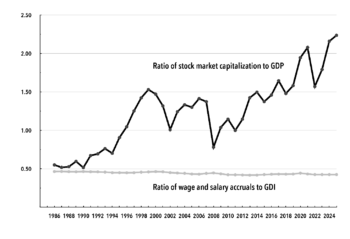
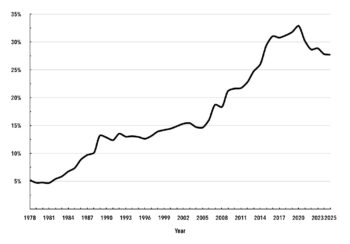
Over the last half-century, the "financial explosion"—manifest in the unrestrained expansion of financialization and its tools and institutions—has fundamentally reshaped the global economy, impacting countries throughout the Global North and South. China, however, has proven to be a distinctive case. Xiaolu Kuang, Zhi Li, and Fusheng Xie probe the question of how and why China has managed to maintain its emphasis on production above finance, and the development all above the accumulation of capital.
July 1, 2026
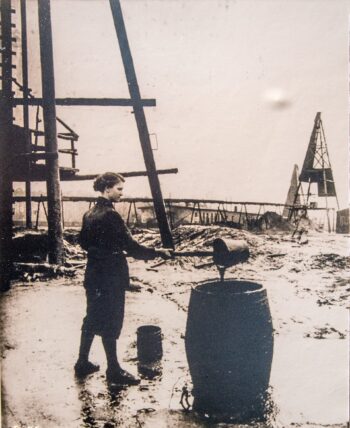
Since the wane of mercantilism in Europe, conceptions of wealth, trade, and productivity have also changed: from one of a zero-sum game reliant only on the productivity of land, to one of the potential for positive-sum wealth created by industry, and, now, to the zero-sum neomercantilism necessitated in a world of resource depletion, where the earth is pushed to its biophysical limits. But the response to this crisis does not have to be further fortification—it could also be a world that organizes itself within the metabolic limitations of nature.
May 1, 2026
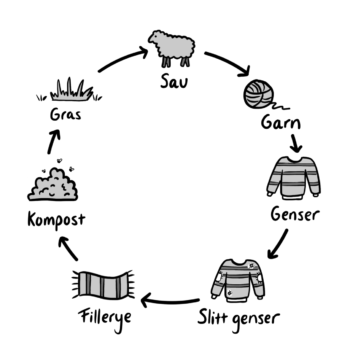
Today, many use the term "circular economy" to describe a shift in the use of industrial waste products in a way that does not challenge the present mode of production. Returning to Marx, Benjamin Selwyn is able to show that this usage of the term is designed to facilitate the acquisitive demands of a capitalist economy, rather than a fundamental shift in resource use.
March 1, 2026
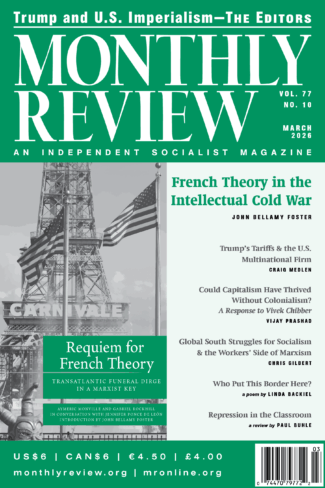
"To make sense of present developments,"
MR editors write in this month's "Notes from the Editors," "it is essential to understand the dialectic of continuity and change in U.S. imperial grand strategy." By charting the evolution from post-Second World War dominance to the collapse of the Soviet Union and the eventual demise of the "Unipolar Moment," the Editors tie the reactionary impulses of MAGA to the raw shows of imperial force driven by Trump's policies.
March 1, 2026
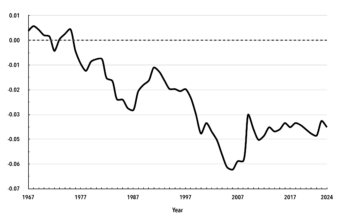
Craig Medlen dissects the logic behind the Trump administration's efforts to impose tariffs as a way to counteract "unfair" U.S. trade deficits. Situating these deficits in the longer history of U.S. trade hegemony and its crumbling position in the global economy, Medlen uses incontrovertible data to illustrate how mainstream economic orthodoxy fails to acknowledge the effects of foreign inputs that integral to the workings of U.S. monopoly capital.
January 1, 2026
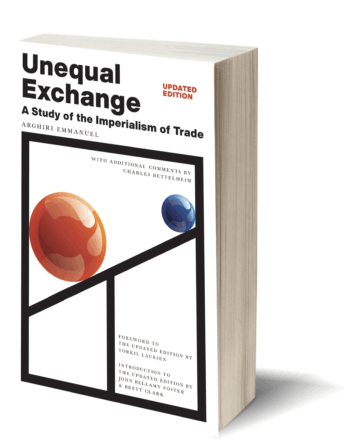
In this Introduction to the updated edition of
Unequal Exchange by Arghiri Emmanuel, published by Monthly Review Press, John Bellamy Foster and Brett Clark offer readers insight into the continuing influence of Emmanuel's seminal work. Through both deep understanding thoughtful critique, the authors deftly situate Emmanuel's text as an indispensable part of an enduring tradition of Marxist analysis of the global dynamics of labor.
November 1, 2025
In a follow-up to their May 2024 article about the IMF'S vise-grip on Argentina's economy, David Barkin and Juan E. Santarcàngelo examine how recent events continue to shape the efforts of the global and domestic ruling classes to dominate Argentine society through debt, currency scams, and political malfeasance. Underlying all of this, they note, is the continued encroachment of the IMF on Argentina's sovereignty, aided and abetted by the far-right president Javier Milei.
October 1, 2025
Michael Meeropol, Howard J. Sherman, and Paul D. Sherman give an account of how mainstream economists came to adopt the idea of secular stagnation, even without recognizing its origins in the work of Marxist economist and
MR founder Paul M. Sweezy. The turn, they write, came in the wake of the Great Recession, when the tendency toward stagnation in the U.S. economy became undeniable.