December 1, 2025
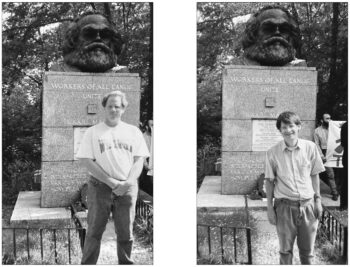
John Bellamy Foster introduces our special issue celebrating the life and work of
MR former coeditor and MR Press author Robert W. McChesney. In his recounting of over 50 years of close friendship and collaboration, Foster paints a portrait of McChesney as a visionary intellectual and activist whose work will reverberate through the communication field for decades to come.
December 1, 2025
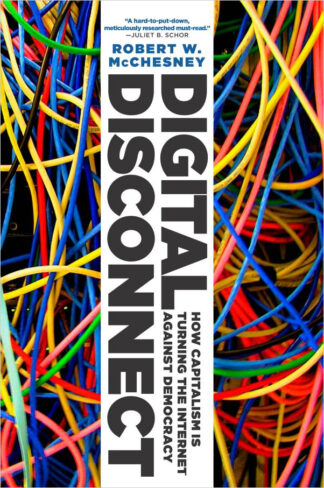
In this transcript of a talk from 2015, Robert W. McChesney discusses the "great definitional communication revolutions" that have shaped humanity's trajectory. Even a decade ago, McChesney was able to see the fraught relationship between new technology and democracy, the re-emergence of fascism, and the political dangers of the Digital Age.
December 1, 2025
To conclude our special issue on Robert W. McChesney's legacy,
MR presents a series of tributes capturing his impact on the world around him. The diversity represented by these illustrious contributors, from his colleagues at the media watch group Fairness and Accuracy in Reporting (FAIR) to Senator Bernie Sanders, is a testament to McChesney's enduring influence.
November 1, 2025
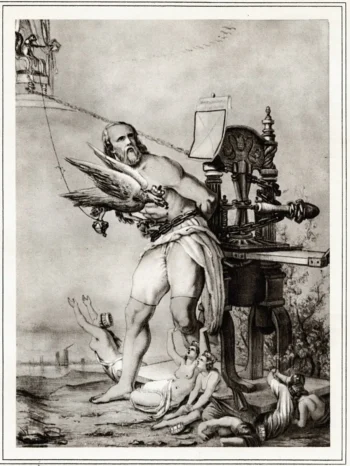
In Aeschylus’s play
Prometheus Bound, the Prometheus is a revolutionary figure. Defying divine interdiction to bring fire to humanity, the Titan has since been adopted by thinkers from the Enlightenment to today to represent revolutionary forces in human existence. So, John Bellamy Foster asks in November’s Review of the Month, what is “Prometheanism,” and how has the term been used (and misused) in discussions of Marx, the ecological crisis, and sustainable human development?
November 1, 2025
In this far-reaching analysis, Vijay Prashad enumerates the conditions of the current conjuncture that, despite seemingly intractable capitalist and imperialist hegemony, point to a reinvigorated revolutionary consciousness among the global population. In a world of capitalist degradation, Prashad declares: "A politics to produce dignity is a socialist politics…. Capitalism inherently generates forms of inequality and indignity. Therefore, all undertakings that seek dignity for all are socialist projects."
November 1, 2025
In a follow-up to their May 2024 article about the IMF'S vise-grip on Argentina's economy, David Barkin and Juan E. Santarcàngelo examine how recent events continue to shape the efforts of the global and domestic ruling classes to dominate Argentine society through debt, currency scams, and political malfeasance. Underlying all of this, they note, is the continued encroachment of the IMF on Argentina's sovereignty, aided and abetted by the far-right president Javier Milei.
October 1, 2025
In this month's "Note from the Editors,"
MR editors detail importance of understanding the world's grossly unequal carbon emissions output in terms of class while also recognizing the role of imperialism at the center of the crisis. "The rapidly worsening climate conditions threatening the world population," they write, "can thus be seen as a product of the ongoing
class war perpetuated by the 'billionaire class' against working people everywhere."
October 1, 2025
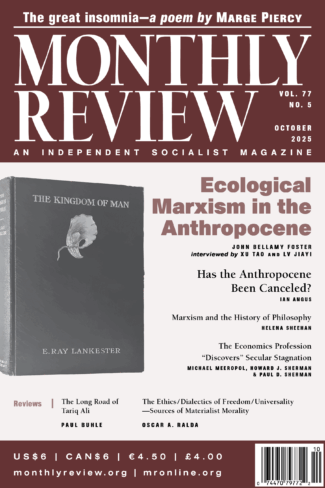
In this interview with Xu Tao and Lv Jiayi, John Bellamy Foster discuss the history and present of ecological Marxism. Foster explores origins of the term
Anthropocene and its predecessors, the concept of degrowth, the continuing influence of metabolic rift theory, and the cutting-edge issues facing young scholars of degrowth today.
October 1, 2025
Ian Angus illuminates the politics behind the decision by the International Union of Geological Sciences not to recognize the Anthropocene as a formal geological epoch. In recounting the debate, Angus explores how the organization undermined the conclusions of top scientists to oppose the establishment of the Anthropocene, and its implications for the public debate about the planetary crisis.
October 1, 2025
"Why," Helena Sheehan asks, "have Marxists…put so much emphasis on the history of philosophy?" She adds: "Is the current G. W. F. Hegel revival conductive to coming to terms with the current conjuncture?" In answering these questions, Sheehan elucidates deep truths about the core of Marxist philosophy and practice, and the importance of remaining deeply rooted in the real world.