July 1, 2026
Considering the "Structural Crisis of Capital" from the perspective of economics, Prabhat Patnaik sheds light on two major aspects that have risen to prominence in our current conjuncture. The first, rampant stagnation and unemployment, is clear and undeniable. The second, particular to the capitalism of the late twentieth century and the shedding of colonies on which imperial nations depended for wealth is particularly salient to Trump's economic strategy of economic recolonization not only through soft power, but direct military action.
July 1, 2026
Martin Hart-Landsberg gives an in-depth account of the oligarchs of Silicon Valley and their embrace of transhumanist ideologies that celebrate individualism and technological advancement above all else. However, he asserts, all is not lost, as growing dissatisfaction with capitalism "is slowly but steadily helping to grow a movement of resistance"—a resistance that must recognize that it is not just tech billionaires but capitalism itself threatening humanity's chance at a better future.
March 1, 2026
Vijay Prashad critiques the argument that colonialism was, at most, ancillary to the transition between capitalism and feudalism in Western Europe. Instead, Prashad argues, "capitalism
as it historically emerged—industrial, global, racialized, and imperial—was inseparable from colonial expropriation." This reality must fuel a Marxist conception of the global struggle for reparations for those who have been oppressed and exploited at the hands of empires past and present.
November 1, 2025
In this far-reaching analysis, Vijay Prashad enumerates the conditions of the current conjuncture that, despite seemingly intractable capitalist and imperialist hegemony, point to a reinvigorated revolutionary consciousness among the global population. In a world of capitalist degradation, Prashad declares: "A politics to produce dignity is a socialist politics…. Capitalism inherently generates forms of inequality and indignity. Therefore, all undertakings that seek dignity for all are socialist projects."
November 1, 2025
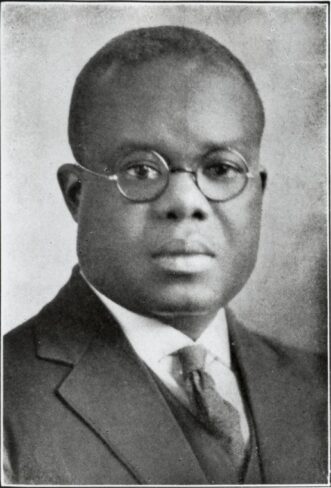
Paul Buhle reviews
Hubert Harrison: Forbidden Genius of Black Radicalism, a new biography of the seminal—yet previously lesser known—activist and journalist, Hubert Harrison. Through this new intellectual and cultural study of Harrison's remarkable life and work, Buhle writes, author Brian Kwoba tells a story of a man ahead of his time in challenging white supremacy and capitalism through Black radical thought.
October 1, 2025
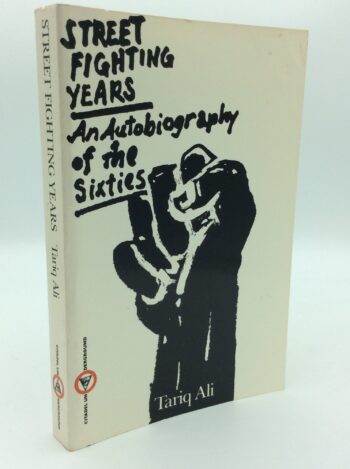
Paul Buhle reviews two books by renowned leftist Tariq Ali. In these two texts, Buhle writes, one can read and discern a history of the UK left. Through Ali's autobiography, Buhle writes, readers can experience the ups and downs of various factions, from the Labour Party to Trotskyist journals; through his memoirs, we get a sense of Ali's deep insights, drawn from his extensive travels and a life deeply embedded in history.
June 1, 2022
What made István Mészáros's life so fascinating, and relevant to issues of socialist construction, was that, having seen both sides of the Cold War, he came to perceive both "real socialism" and twentieth-century capitalism as two variants of the same system. He called this the capital system. The basic commonality among most countries of both the East and the West in the twentieth century was the extraction of surplus labor from workers who did not control their own work processes.
June 1, 2022
István Mészáros was a global thinker strongly committed to anti-imperialist struggles. In this respect, he allied himself with those fighting for socialist transformation in the Philippines, Nicaragua, Venezuela, Brazil, and elsewhere. He argued that in the descending phase of capitalism there was a "downward equalization of the rate of exploitation," by which he meant a race to the bottom in wages and working conditions, enforced by a global system of monopolistic competition.
June 1, 2022
Increasing numbers of left-wing activists around the world are turning to Vincent Bevins's The Jakarta Method to learn more about the horrific atrocities committed by the United States against peoples' struggles for the right to self-determination in the so-called postcolonial era. In particular, the book describes how imperialist expansion destroyed revolutionary struggles in the third world.
December 1, 2021
This exchange appeared in the September 1961 issue of Monthly Review. The questions were submitted, in writing, to Comandante Guevara by Leo Huberman during the week of the Bay of Pigs invasion; the answers were received at the end of June.