May 1, 2023
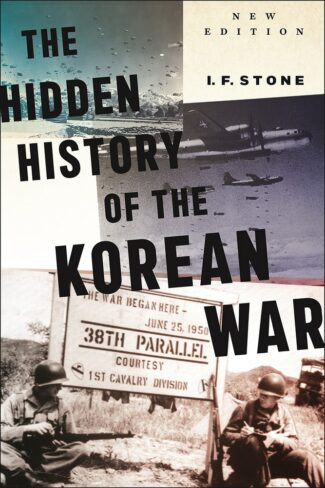
First published in 1952, I. F. Stone's Hidden History of the Korean War was a stunning indictment of the U.S. war machine and the mass media's unquestioning acceptance of the government's deception. In their new introduction, Tim Beal and Gregory Elich explore Hidden History's continuing relevance to current events, including the rapidly escalating New Cold War.
January 1, 2023
In this prescient chapter from 1982, author and activist Anne Braden draws a direct line from the anti-Communist witch hunts of the McCarthy Era to state repression of mass movements from the civil rights era to the rapid expansion of the racist police state that continues to this day. This chapter is reprinted from Anne Braden Speaks (Monthly Review Press, 2022).
October 1, 2022
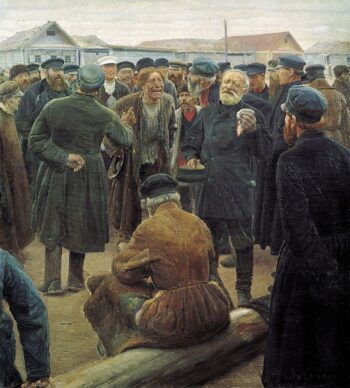
In the past and in his own time, Marx has been portrayed as endorsing the enclosure of the commons as a necessary historical stage on the path to socialism. However, a more accurate account, one that is critical of the enclosure movement, can be found in his response to the destruction of commons-based peasant communities in Russia—while it was actually happening.
April 1, 2022
The cold-blooded murders of activists by state forces in India represents a historical pattern of extrajudicial repression.
June 1, 2018
With the eruption in March of the scandal around Cambridge Analytica and Facebook, articles raising the alarm on "surveillance capitalism" are suddenly everywhere. The term, which was coined in MR in August of 2014, was developed to highlight the links between digital spying systems and contemporary capitalism as a whole. Academic interpretations of the concept effectively divorced surveillance capitalism from class analysis, and from the overall political-economic structure of capitalism—as if surveillance could be abstracted from monopoly-finance capital as a whole.
February 1, 2018
The state cannot be other than Leviathan in imposing its structurally entrenched power on overall societal decision-making. Yet a way must be found to extricate humanity from the ever more dangerous, arbitrary, and alienated form of the Leviathan state. Indeed, the survival of humanity depends on it.
December 1, 2017
Amid deep disparities between states, the act of moving across borders becomes a way of re-politicizing the very idea of states, borders, and nations—concepts that have for centuries been taken for granted and excluded from debate.
April 1, 2017
Not only a new administration, but a new ideology has now taken up residence at the White House: neofascism. It resembles in certain ways the classical fascism of Italy and Germany in the 1920s and '30s, but with historically distinct features specific to the political economy and culture of the United States in the opening decades of the twenty-first century.
February 1, 2017
Since the 1980s, economic growth in the core capitalist countries has been driven by an enormous expansion of financial capital, accompanied by steady deindustrialization. In recent years, the monopoly power of this financial capital has displayed increasingly tyrannical characteristics: it depends for its continued growth on ever-increasing indebtedness and dependence in developing nations, widening the divide between rich and poor and ultimately fostering state violence that serves to suppress popular resistance.… [Today,] military and monetary strength work together to profit from inequality and instability in emerging economies.
January 1, 2017
Following the July 14, 2016, massacre in Nice, French President François Hollande once again extended for three months a state of emergency that was to have ended on July 26. An initial, twelve-day state of emergency had been declared after the Paris attacks and extended for three months by a law of November 2015. Still another three-month extension was added and came to an end on May 26, only to be extended for two additional months. Despite the obvious ineffectiveness of such a measure…it has been extended yet again, through January 2017.… This normalization of the "state of exception" has provoked only a muted public reaction. France has thus entered into a permanent state of emergency. This choice is not the result of exceptional events to which the country must respond, but rather expresses an intention to change the political system, as shown by the move to constitutionalize the state of emergency.