July 1, 2025
Through a detailed exploration of the impacts of collective farming on local soils, Salvatore Engel-Di Mauro engages in key questions around the past and present of communal agricultural production. These insights shed light on not only specific projects, but future considerations for communal farming, framed by the dialectical relationship of nature and society.
June 1, 2025
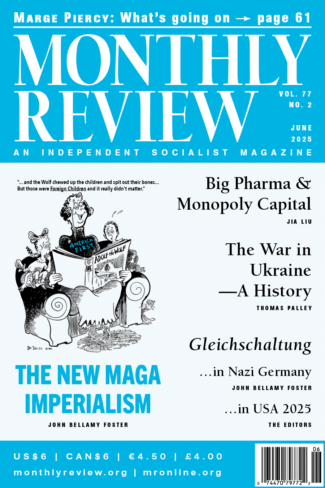
This month, the editors dive into the history of Nazi Germany for a discussion of
Gleichschaltung, which in this instance describes the "falling into line" of institutions and individuals under fascism. As the editors point out, the extralegal and norm-breaking actions may be justified rhetorically by the fascist regime but require the acquiescence of the larger society in order to become effective—a process we are currently watching in real time.
June 1, 2025
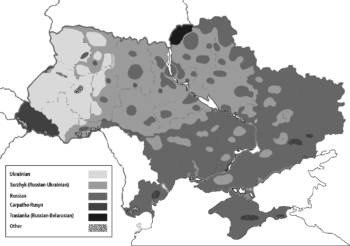
Thomas Palley identifies and illuminates both the internal and external drivers of the war in Ukraine. Through this article, he explores how the breakup of the Soviet Union, the aggressive expansion of NATO, U.S. neoconservative geopolitics, present-day Ukraine's domestic tensions, and other factors led to the current conflict, in which the only winner seems to be the United States.
June 1, 2025
In this excerpt from John Bellamy Foster's
Trump in the White House (Monthly Review Press, 2017), Foster expands on the concept, origins, and practical effects of
Gleichschaltung (falling into line) in Nazi Germany and its relevance today. As Foster writes "to put such a neo-fascist strategy in place requires a new kind of
Gleichschaltung"; one in which all of society—from the judiciary to Congress to cultural and media institutions—are brought into line.
March 1, 2025
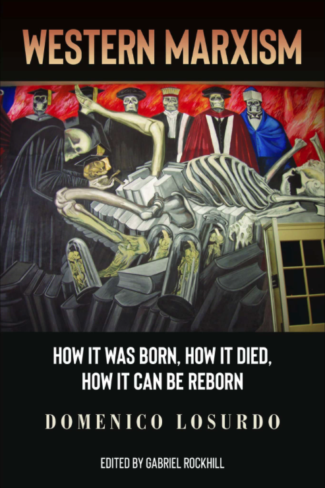
John Bellamy Foster and Gabriel Rockhill assess the history and influence of Western Marxism, defined not geographically, but by a rejection of the Marxism developed in the Soviet Union, in the Global South, and even in classical Marxism. This strain of Marxist thought, birthed in the imperial core, represents a concession to the dominance of U.S. ideology, rather than to correct the pressing issues confronting society today.
February 1, 2025
Over the last quarter century—and especially since the beginning of Israel's latest genocidal incursion into Palestine in October 2023—the term "settler colonialism" has proliferated in academic and popular discourse. In February's "Review of the Month," John Bellamy Foster connects readers to thinkers from around the globe and across time to illustrate the phenomenon of settler colonialism as a dimension of imperialism, and thus capitalism, driven by a rapacious extractivism that threatens the whole of humanity.
February 1, 2025
In this deeply stirring account, Sit Tsui and Lau Kin Chi share their field research, conducted over years of travel and relationship-building, into the Japanese antinuclear movement. As the people and environment of Fukushima continue to be impacted by the disaster at the Fukushima Daiichi power plant in March 2011, the No-Nukes movement has grown in response, encompassing aspects of society ranging from artists and monks to fisherfolk and intellectuals.
December 1, 2024
As the atrocities visited by Israel upon the Palestinian people continue to multiply, this month's "Notes from the Editors is a forceful condemnation of not only the Zionist entity, but the entire U.S.-led neoliberal world order. Israel's relentless pursuit of genocide in Palestine "has destroyed any pretense of a commitment to universal human rights on the part of the West," undeniably revealing "imperialism and settler colonialism in their most brutal forms" as the entire world watches.
December 1, 2024
John Bellamy Foster returns to his impactful Marx's Ecology (Monthly Review Press, 2000), for this new introduction for the recent German translation of the book (Marx' Ökologie, Edition Assemblage, 2024). "There is no longer any question," he concludes, "about the depth of Marx's metabolic critique…or its centrality in terms of the philosophy of praxis in our day."
December 1, 2024
Mark Allison reviews Brian Merchant's timely Blood in the Machine (Little, Brown, and Co., 2023), finding in it a compelling historical account of the original Luddite movement with important parallels to our own age of Big Tech. However, Allison asks, are the lessons drawn from Blood in the Machine even possible within the confines of capitalism?