

For an Ecosocialist Degrowth
- Issue:
- Vol. 73, No. 11 (April 2022)
April 1, 2022
Degrowth and ecosocialism are two of the most important movements—and proposals—on the radical side of the ecological spectrum.
April 1, 2022
Degrowth and ecosocialism are two of the most important movements—and proposals—on the radical side of the ecological spectrum.

March 1, 2022
From September to November 2021, overlapping with the 2021 UN Climate Change Conference negotiations in Glasgow, three major interrelated developments occurred in global finance. Taken together, these changes mark a turning point in the financial expropriation of the earth and the culmination of a theoretical shift in the dominant economic paradigm aimed at the unlimited accumulation of total capital, which is now seen as including "natural capital."

February 1, 2022
Across the humanities and the social sciences, critical attention is being given to the nonhuman as an ecological, philosophical, and political problem—the nonhuman here meaning anything from animals and plants to manufactured objects. Going under names as various as new materialism, political ecology, and object-oriented ontology, these studies comprise a movement that is largely described as the nonhuman turn.

November 1, 2021
The widespread view on the left that Marx had adopted an extreme productivist view of the human domination of nature—and hence had failed to perceive the natural limits to production and ecological contradictions in general, giving them at most only marginal attention—was contradicted by his theory of the metabolic rift.

October 1, 2021
By any standards, John Burdon Sanderson Haldane (1892–1964) was a fascinating man. An eminent scientist, prolific writer and speaker, fiery political activist, and all-round colorful character, he has been the subject of several full-length biographies and multiple biographical sketches.

September 1, 2021
Assuming that the Anthropocene will soon be officially designated as the earth's current epoch, there remains the question of the geological age with which the Anthropocene begins. Adopting the standard nomenclature for the naming of geological ages, the term Capitalinian is proposed as the most appropriate name for the new geological age, conforming to the historical period that environmental historians see as commencing around 1950, in the wake of the Second World War, the rise of multinational corporations, and the unleashing of the process of decolonization and global development.
September 1, 2021
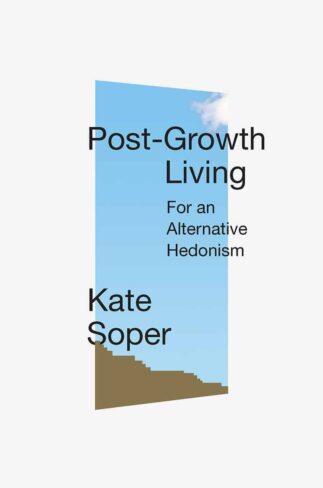
The crux of Kate Soper's Post-Growth Living is simple: we need to redefine "the good life." We need to move away from a culture that equates the good life with endless consumption and toward one that equates it with experiences that are not defined by the market. Not only is this transition ecologically necessary, but it will also lead to fairer, and far more pleasurable, experiences.

July 1, 2021
In China, the orientation toward "ecological civilization" has been proposed for some years. But if the hard core of developmentalism and modernization continues to be the guiding principle, China will continue to be challenged by social injustice and environmental devastation.

June 1, 2021
The death of Salvador Allende in 1973 marked, simultaneously, not only the demise of one of the great socialist experiments, and the launching of neoliberalism; it also represented the loss in Allende of one of the great figures in social medicine. Nowhere has neoliberalism had more devastating effects than in the destruction of public health and social medicine initiatives throughout the world.

April 1, 2021
To create and preserve a permanent thriving agriculture for untold generations to come, it is essential to manage and care for soils using practices that build and maintain healthy soils.