July 1, 2025
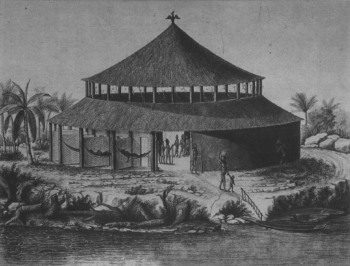
"To tell the history of resistance," Roberta Traspadini writes, "we need to investigate the territories where people live their daily lives." Using both historical analysis and contemporary data, Roberta Traspadini reveals the importance of Brazilian Quilombola communities as local sites of struggle against colonialism, capitalism, and imperialism. These quilombagem, she argues, reveal the revolutionary legacy that persists among the most marginalized in Brazilian society.
July 1, 2025
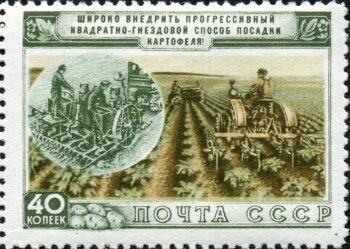
Through a detailed exploration of the impacts of collective farming on local soils, Salvatore Engel-Di Mauro engages in key questions around the past and present of communal agricultural production. These insights shed light on not only specific projects, but future considerations for communal farming, framed by the dialectical relationship of nature and society.
July 1, 2025
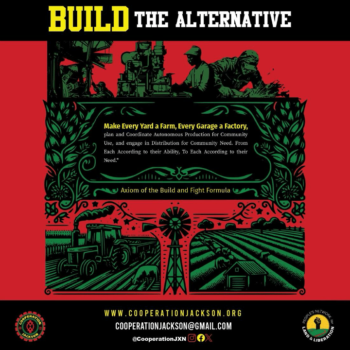
Kali Akuno of Cooperation Jackson outlines the ongoing projects and objectives of the Mississippi-based collective Cooperation Jackson. Akuno enumerates the many ways Cooperation Jackson has worked toward improving material conditions and building dual power in support of the Black working and peasant classes in the Mississippi Delta region.
July 1, 2025
Sit Tsui and Lau Kin Chi elucidate the history of China's People's Communes as told through the lens of three present-day rural villages. In these villages, they observe the effects of the project's dismantling and diminishing collective ownership and land management, with the conclusion that a return to collectivism is vital for carrying forward the socialist project.
July 1, 2025
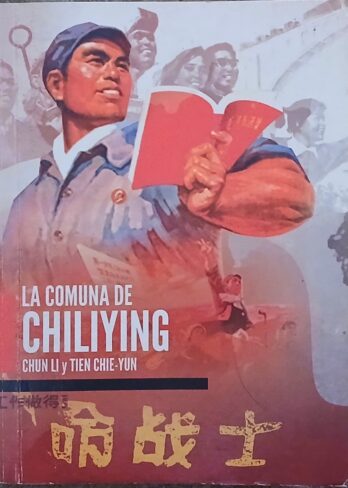
Inside a People's Commune is a short 1974 book documenting life in the Chiliying Commune, one of the earliest in revolutionary China. The text explores the commune's organization, challenges, achievements, and mass-based character. Hugo Chávez later drew inspiration from the book, citing it when launching Venezuela's communal project. Today, it continues to serve as a pedagogical tool for Venezuelan communards working to build a unified system of socialist self-government.
June 1, 2025
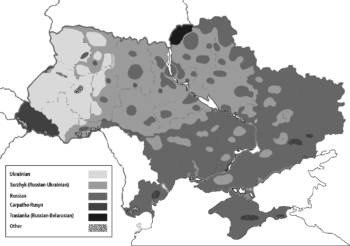
Thomas Palley identifies and illuminates both the internal and external drivers of the war in Ukraine. Through this article, he explores how the breakup of the Soviet Union, the aggressive expansion of NATO, U.S. neoconservative geopolitics, present-day Ukraine's domestic tensions, and other factors led to the current conflict, in which the only winner seems to be the United States.
June 1, 2025
In an age of cutting-edge medical science, how do the world's largest pharmaceutical companies stifle innovation in order to juice profits and remain competitive in the international markets? The answer, Jia Liu writes, can be found in the concept of monopoly capitalism. This brand of "intellectual monopoly capitalism," she notes, contributes to "a logic of expropriation and rent-seeking," leading in turn to "closed science and declining medical innovation."
May 1, 2025
Pranay Somayajula dives deep into how the idea of decolonization has taken hold both theoretically and practically, showing how its deployment by the fascist Hindutva movement to justify anti-Muslim oppression reveals a latent threat: potential cooptation by actors seeking to promote nationalist identities in postcolonial contexts. Somayajula concludes that what is needed is a "return to a materially grounded understanding of empire and resistance," adding that "Any version of decolonization…placing a greater importance than the abstract than the material is a 'decolonization' that has lost its way."
May 1, 2025
In this contribution to the further development of socialism with Chinese characteristics Cheng Enfu and Yang Jun offer their "Theory of Triple Revolution," enumerating the historical stages of the Chinese Revolution and analyzing its current trajectory. A complete revolutionary view of Marxism in China, they conclude, "will advance the spirit of the revolution to its completion….[moving] forward along the correct track of Marxism, such that a powerful revolutionary vision will open up before us."
April 1, 2025
What is ecological civilization? In this article, Chen Yiwen presents a dialectical analysis that illuminates the theoretical and practical elements of ecological civilization, particularly as it develops in the context of China. In China, she notes, significant progress has been made, but there remain outstanding questions that must be resolved during the transition to an ecologically harmonious society that promotes global equality and human flourishing.