September 1, 2025
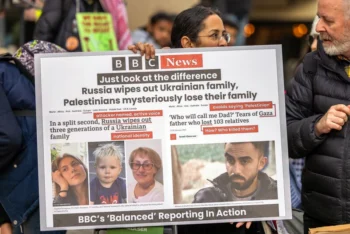
In this interview, published here for the first time in English, Abdaljawad Omar (aka Abboud Hamayel) and Pasquale Liguori discuss Western media attempts to force upon Palestinians narratives of either victimhood or savagery. These portrayals, however, only obscure the threat Palestinian resistance poses not just to Zionism, but to the colonial project globally.
September 1, 2025
In 2003, Haitian president Jean-Betrand Aristide publicly called for France to pay reparations to Haiti—and less than a year later, was whisked away from the island via U.S. military aircraft. Steve Cushion sheds light on the colonial and neocolonial relationships that have imposed crushing debt on Haiti and its people, and their continuing implications for Haiti's development.
September 1, 2025
Joel Wendland-Liu reviews
Armed Struggle?, Gerald Horne's exploration of the state violence and repression that were successfully employed to demolish the Black Panther Party and its influence throughout the 1960s and '70s. Though Horne's recounting, Wendland-Liu writes, we can take powerful lessons about the roles of race and class in the militant drive toward liberation.
September 1, 2025
"Assume a ship under the command of a mad captain headed for certain shipwreck. What would freedom mean to the people on board?" asked
MR cofounder Paul M. Sweezy in this previously unpublished discussion piece. "There can hardly be any doubt about the answer…the essence of freedom for the people on the ship is the ability to control their
collective fate."
July 1, 2025
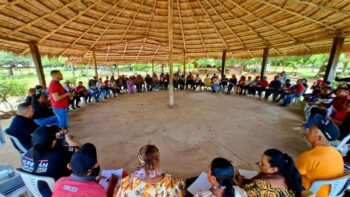
Inspired by the Venezuelan project of building socialism via the commune, this special issue looks at attempts to use communal models in socialist projects in a range of different contexts, as well as the theoretical bases for such an endeavor. In their introduction, guest editors Chris Gilbert and Cira Pascual argue that the theme of
Communes in Socialist Construction is an important opportunity for engaged Marxist reflection of a kind that offers valuable contributions to the universal body of socialist thought.
July 1, 2025
Ángel Prado, a founder of El Maizal Commune and Minister of Communes since 2024, discusses Venezuela's communal project as both a response to urgent material needs and a long-term strategy for building socialism. Drawing on his experience as a grassroots organizer, he explores how communes are structured, how they relate to the state, and how they embody a vision of popular power. He also reflects on the need for unity within the Chavista movement.
July 1, 2025
João Pedro Stedile, founder and spokesperson of Brazil's Landless Workers' Movement (MST), reflects on the movement's efforts to build a socialist alternative through land occupations, cooperative production, and political education. He highlights the importance of collective struggle and the MST's deepening ties with Venezuela's communal movement as part of a broader project to construct a just and solidarious society.
July 1, 2025
"To tell the history of resistance," Roberta Traspadini writes, "we need to investigate the territories where people live their daily lives." Using both historical analysis and contemporary data, Roberta Traspadini reveals the importance of Brazilian Quilombola communities as local sites of struggle against colonialism, capitalism, and imperialism. These quilombagem, she argues, reveal the revolutionary legacy that persists among the most marginalized in Brazilian society.
July 1, 2025
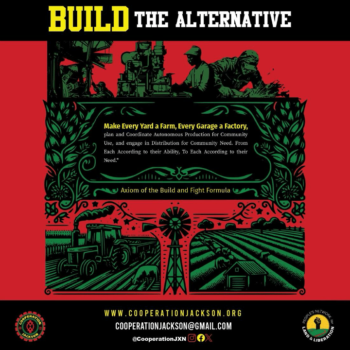
Kali Akuno of Cooperation Jackson outlines the ongoing projects and objectives of the Mississippi-based collective Cooperation Jackson. Akuno enumerates the many ways Cooperation Jackson has worked toward improving material conditions and building dual power in support of the Black working and peasant classes in the Mississippi Delta region.
June 1, 2025
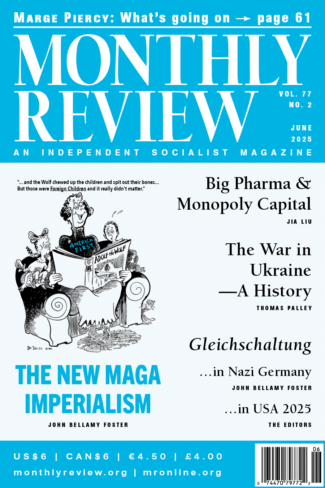
This month, the editors dive into the history of Nazi Germany for a discussion of
Gleichschaltung, which in this instance describes the "falling into line" of institutions and individuals under fascism. As the editors point out, the extralegal and norm-breaking actions may be justified rhetorically by the fascist regime but require the acquiescence of the larger society in order to become effective—a process we are currently watching in real time.