April 1, 2026
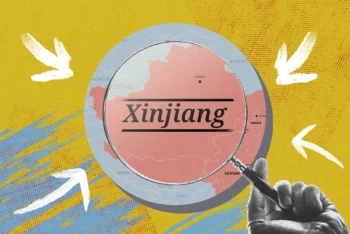
What is really happening in Xinjiang? Vijay Prashad and Tings Chak write: "There is no evidence of a policy of physical annihilation of the Uyghur peoples by the Chinese government, unlike say, direct evidence of extermination by the Israeli government against the occupied Palestinian people. There are no mass graves and no accusations of systematic killing—the hallmarks of a genocide."
April 1, 2026
Applying Marxist labor theory to the rise of artificial intelligence and its effects on workers, Te Li presents an understanding of labor in the age of increasing reliance on algorithms and digital technologies. As Li argues: "In the civilization of general intellect labor, where the knowledge economy dominates, knowledge-intensive labor such as scientific research, technological innovation, artistic creation, and education and training will become primary forms of labor."
March 1, 2026
Vijay Prashad critiques the argument that colonialism was, at most, ancillary to the transition between capitalism and feudalism in Western Europe. Instead, Prashad argues, "capitalism
as it historically emerged—industrial, global, racialized, and imperial—was inseparable from colonial expropriation." This reality must fuel a Marxist conception of the global struggle for reparations for those who have been oppressed and exploited at the hands of empires past and present.
March 1, 2026
Karl Marx originally planned to complement
Capital with an additional work exploring capitalism from the side of the workers, which he never completed. In this article, Chris Gilbert argues that this projected "workers' side of Marxism" has a special relevance to the processes of anti-imperialist struggle in the Global South, explaining why they often turn to socialism despite underdeveloped productive forces and the relative scarcity of a classical proletariat.
March 1, 2026
A new poem by Linda Backiel.
March 1, 2026
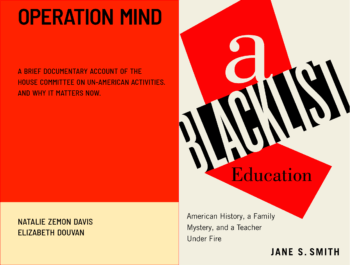
In this dual review, Paul Buhle lends contemporary context to the histories of McCarthyism found in the recently published
A Blacklist Education, by Jane S. Smith, and
Operation Mind, by Natalie Zemon Davis and Elizabeth Donovan. In these two books, Buhle writes, readers can find parallels with the was that is today being waged against university professors and students for political activities—a stark reminder that political witch-hunts did not end with Joe McCarthy.
February 1, 2026
In this illuminating article, Hèla Yousfi explores the history of solidarity of the Tunisian left and labor movements with the struggle for Palestinian liberation. Through this recounting, Yousfi is able to map out a history of how the brutal occupation of Palestine has influenced political consciousness not only in Tunisia, but throughout the Arab world.
February 1, 2026
Despite its relatively small size, Mauritius increasingly is looming large in the geopolitical jostling in the Indian Ocean region. Tracing the country's often overlooked role in global affairs from the sixteenth century up until the present day, Stefan Gua provides readers with an insightful account of how politics both inside and outside of Mauritius reflect broader debates about colonialism, militarism, and self-determination.
February 1, 2026
A new poem by Marge Piercy.