October 1, 2026
Paul Buhle reviews
Emily Pierson: A Yankee Radical, a new biography of the eponymous Christian radical and communist organizer. As a "strong willed" woman born at the nineteenth century and living well into the twentieth, Pierson is a figure whose work spanned the fight for women's suffrage, public health, the labor movement, and the Russian, Chinese, and Cuban Revolutions, traveling to the latter countries toward the end of her life. As a writer, teacher, churchgoer, and worker, Pierson, Buhle writes, was a presence to be reckoned with throughout her lifetime.
September 1, 2026
Paul Buhle reviews
The Radical Jewish Tradition by Donny Gluckstein and Janey Stone. The book, Buhle writes, is a window onto "the antinomies of nineteenth-century Jewish life"—including the growing movement against Zionism and for socialism among Eastern European Jews. This authors, Buhle notes, also tells the story of Jewish communists in Britain, the United States, and beyond, taking into account the wide sweep of Jewish left activity globally, situating the present struggles against genocide in Palestine squarely within the legacy of radical Jews everywhere.
March 1, 2026
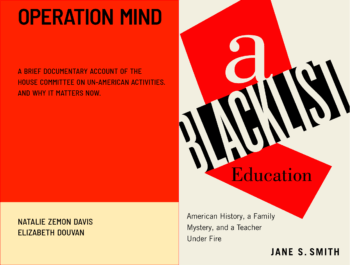
In this dual review, Paul Buhle lends contemporary context to the histories of McCarthyism found in the recently published
A Blacklist Education, by Jane S. Smith, and
Operation Mind, by Natalie Zemon Davis and Elizabeth Donovan. In these two books, Buhle writes, readers can find parallels with the was that is today being waged against university professors and students for political activities—a stark reminder that political witch-hunts did not end with Joe McCarthy.
February 1, 2026
Paul Buhle reviews
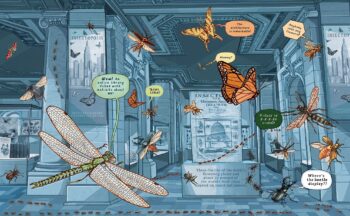
Insectopolis: A Natural History, a new graphic novel by Peter Kuper. In the book, Kuper, a prolific producer and publisher of left-wing comics, spins a tale of two siblings who find themselves in a world of insects. Through encounters with butterflies, beetles, ants, and more, Kuper reveals the deep entanglements between human society—at its best and worst—and the creatures of its living environment.
December 1, 2025
To conclude our special issue on Robert W. McChesney's legacy,
MR presents a series of tributes capturing his impact on the world around him. The diversity represented by these illustrious contributors, from his colleagues at the media watch group Fairness and Accuracy in Reporting (FAIR) to Senator Bernie Sanders, is a testament to McChesney's enduring influence.
November 1, 2025
Paul Buhle reviews
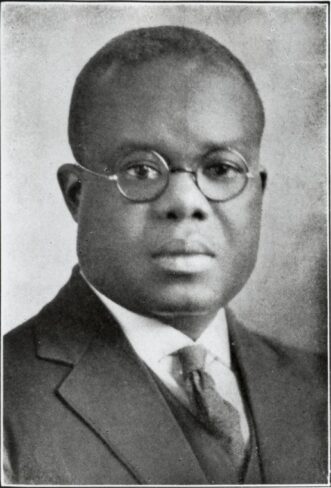
Hubert Harrison: Forbidden Genius of Black Radicalism, a new biography of the seminal—yet previously lesser known—activist and journalist, Hubert Harrison. Through this new intellectual and cultural study of Harrison's remarkable life and work, Buhle writes, author Brian Kwoba tells a story of a man ahead of his time in challenging white supremacy and capitalism through Black radical thought.
October 1, 2025
Paul Buhle reviews two books by renowned leftist Tariq Ali. In these two texts, Buhle writes, one can read and discern a history of the UK left. Through Ali's autobiography, Buhle writes, readers can experience the ups and downs of various factions, from the Labour Party to Trotskyist journals; through his memoirs, we get a sense of Ali's deep insights, drawn from his extensive travels and a life deeply embedded in history.
January 1, 2025
This month, we at MR had the great pleasure of publishing this note on Roxanne Dunbar Ortiz's Indigenous Peoples' History of the United States: A Graphic Interpretation, written by Dylan Davis and Paul Buhle, with illustrations from the book by illustrator Paul Peart-Smith.
December 1, 2024
In this review of Andrew Drummond's The Dreadful History and Judgement of God on Thomas Müntzer (Verso Books, 2024), Paul Buhle explores how the influence of this Christian priest reverberated throughout the centuries, inspiring generations of future revolutionaries—including Karl Marx himself.
January 1, 2024
In this review of Linda Dittmar's Tracing Homelands, Paul Buhle writes, "History may yet hold hope when hope is otherwise lacking when we reject the stalemate that only leads to despair."