May 1, 2026
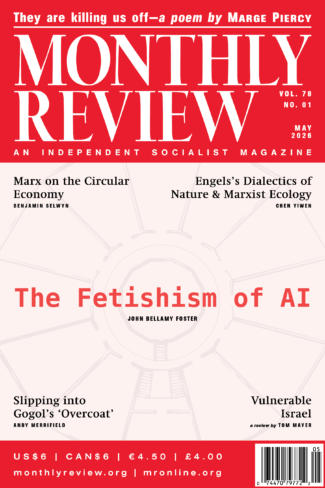
This month's "Notes from the Editors" dissects recent attacks on historical materialism from so-called social materialism. This way of thinking, the editors write, is profoundly divorced from Marxism, in that it lacks a dialectical foundation and eliminates the ethical domain that is critical to building a revolutionary praxis.
May 1, 2026
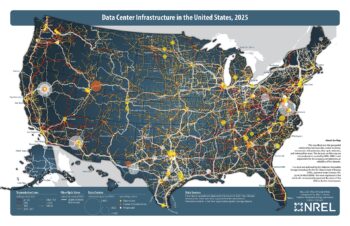
John Bellamy Foster takes on sweeping questions of artificial intelligence and its role in today's capitalist society. "The Great Houses of AI are divided against themselves and cannot stand," he writes, "If humanity is to flourish, the forces and relations of production must be revolutionized together…creating a world of sustainable human development."
May 1, 2026
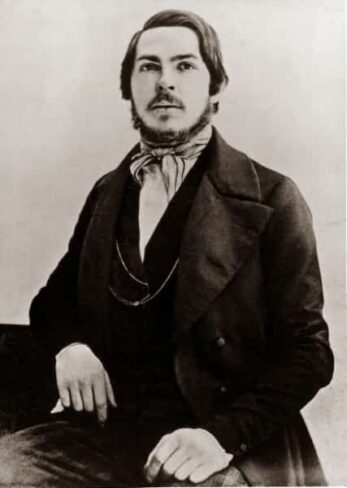
Yiwen Chen dives deep into Frederick Engels's
Dialectics of Nature in order to give context to present-day debates surrounding the juxtaposition of the dialectics of nature and Marxist ecology. "It is hardly surprising that Engels's and Marx's ecological ideas are not entirely identical," Chen writes. "Nevertheless, their ideas do possess an inherent consistency."
May 1, 2026
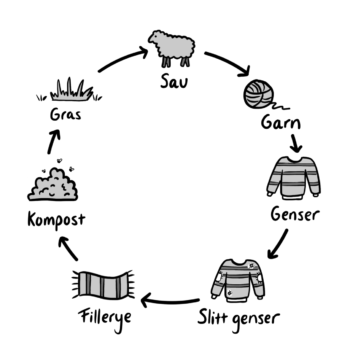
Today, many use the term "circular economy" to describe a shift in the use of industrial waste products in a way that does not challenge the present mode of production. Returning to Marx, Benjamin Selwyn is able to show that this usage of the term is designed to facilitate the acquisitive demands of a capitalist economy, rather than a fundamental shift in resource use.
May 1, 2026
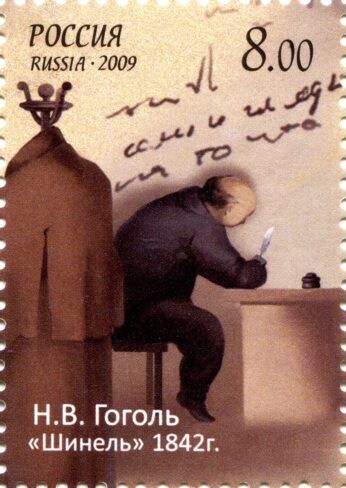
Andy Merrifield reflects on Nikolai Gogol's short story "The Overcoat," tying it to "a distinctively Marxist problematic." In the protagonist of the tale, a Russian counsellor whose life is forever changed by the acquisition of a new overcoat, Merrifield finds a character who, like Marx, knows firsthand what a single coat can tell us about the structures of society.
May 1, 2026
A new poem by Marge Piercy.
May 1, 2026
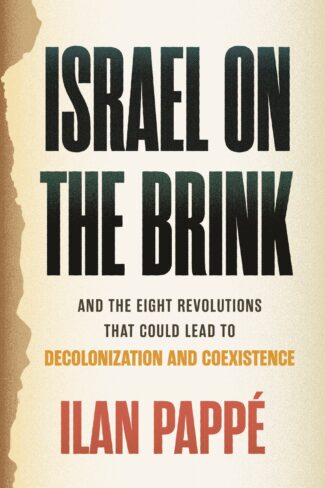
In this review of Ilan Pappé's
Israel on the Brink, Tom Mayer considers the famed historian's assessment of the increasingly precarious Zionist state. In the book, Mayer writes, readers will find a thoughtful consideration of the past, present, and potential events that could shape a new vision for Palestine.