March 1, 2026
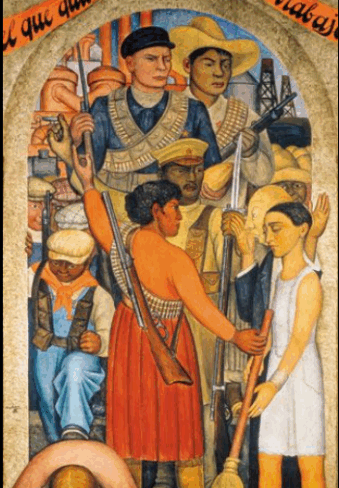
Vijay Prashad critiques the argument that colonialism was, at most, ancillary to the transition between capitalism and feudalism in Western Europe. Instead, Prashad argues, "capitalism
as it historically emerged—industrial, global, racialized, and imperial—was inseparable from colonial expropriation." This reality must fuel a Marxist conception of the global struggle for reparations for those who have been oppressed and exploited at the hands of empires past and present.
March 1, 2026
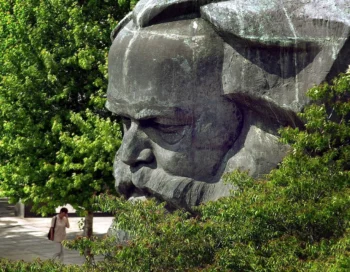
Karl Marx originally planned to complement
Capital with an additional work exploring capitalism from the side of the workers, which he never completed. In this article, Chris Gilbert argues that this projected "workers' side of Marxism" has a special relevance to the processes of anti-imperialist struggle in the Global South, explaining why they often turn to socialism despite underdeveloped productive forces and the relative scarcity of a classical proletariat.
March 1, 2026
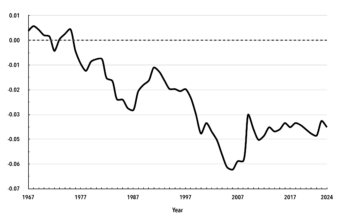
Craig Medlen dissects the logic behind the Trump administration's efforts to impose tariffs as a way to counteract "unfair" U.S. trade deficits. Situating these deficits in the longer history of U.S. trade hegemony and its crumbling position in the global economy, Medlen uses incontrovertible data to illustrate how mainstream economic orthodoxy fails to acknowledge the effects of foreign inputs that integral to the workings of U.S. monopoly capital.
February 1, 2026
Using historical databases and quantitative analysis, Thomas E. Lambert calls into question the assertion that the trans-Atlantic slave trade can be considered a separate phenomenon from, rather than a major supporting factor in, the Industrial Revolution in England. Asserting otherwise, he writes, is a to deny "a horrifying and inhuman part of the global history of capitalism."
February 1, 2026
In this illuminating article, Hèla Yousfi explores the history of solidarity of the Tunisian left and labor movements with the struggle for Palestinian liberation. Through this recounting, Yousfi is able to map out a history of how the brutal occupation of Palestine has influenced political consciousness not only in Tunisia, but throughout the Arab world.
February 1, 2026
Despite its relatively small size, Mauritius increasingly is looming large in the geopolitical jostling in the Indian Ocean region. Tracing the country's often overlooked role in global affairs from the sixteenth century up until the present day, Stefan Gua provides readers with an insightful account of how politics both inside and outside of Mauritius reflect broader debates about colonialism, militarism, and self-determination.
February 1, 2026
Speaking before at the Opening Ceremony of the Fourth World Conference on Marxism in Beijing, John Bellamy Foster discusses the development of eco-Marxism and its relation to Marxist theory. Here, Foster argues, "eco-Marxism as we know it today is not simply another branch of Marxism," but is a pathway to the projects of complete socialism and ecological civilization.
January 1, 2026
David E. Perlman and Ashly Vigneault explore the linkages between humanity's metabolic rift with nature and the accelerating emergence of epidemics, which are fundamentally related to the capitalist mode of production and concomitant alienated social metabolism. Using historical and epidemiological research that extends from the rise of the bubonic plague to the emergence of COVID-19, Perlman and Vigneault are able to deftly tie these concepts to the breach of planetary boundaries that threatens all of humanity.
January 1, 2026
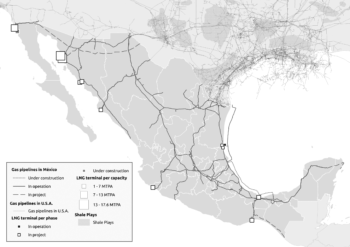
Mateo Crossa delineates the history of U.S. imperialism in Mexico through the lens of its domination of the fossil fuel industry, particularly by way of the Shale Revolution and the advent of fracking. "By engineering new regional dependencies and reshaping energy alliances to suit is strategic ambitions," Crossa writes, "the United States weaponized its command over natural gas to deepen its grip on the global fossil energy system and reinforce its imperial reach."
December 1, 2025
John Nichols, Robert W. McChesney's longtime collaborator and frequent coauthor, celebrates McChesney's near-clairvoyant thought and scholarship. Nichols notes that McChesney's impressive foresight enabled him to see the pitfalls of the digital age long before the Internet became a tool for the worst impulses of the elites under capitalism.