December 1, 2025
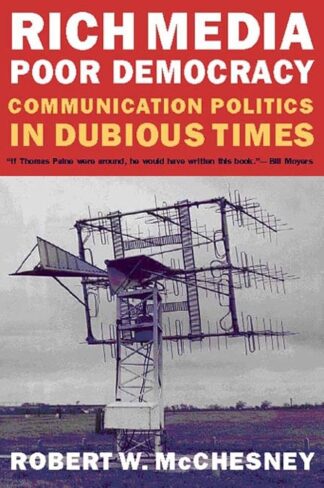
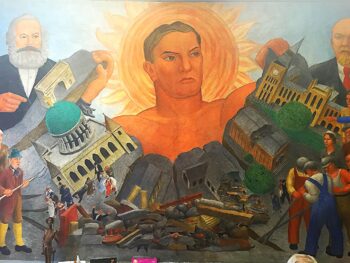
Matthew Rothschild looks back on nearly 40 years working alongside his friend and colleague Robert W. McChesney. McChesney, he writes, brought to the world a sharp analysis of not only the contradiction between corporate media and democracy, but between the capitalist system as a whole and a true democracy that serves the people.
December 1, 2025
Sigurd Allern echoes Robert W. McChesney's call for an insurgent communication scholarship that extends beyond the borders of academia and understands media not just as an industry, but as a public good and—critically—key infrastructure for functioning democracy.
December 1, 2025
Mandy Tröger and Sydney L. Forde explore the impact that Robert W. McChesney's work has had on both the communication field and on their work as the new generation of scholars. "To honor [McChesney]," they write, "is not to look up in awe, but look out…toward the unfinished work of building a more democratic field and society."
December 1, 2025
Victor Pickard celebrates the passion and clarity that Robert W. McChesney brought to his work as an author, media advocate, and founder of Free Press—and in particular, McChesney's bold proposals for a publicly funded and democratic model of local journalism designed to serve communities, rather than corporate interests.
December 1, 2025
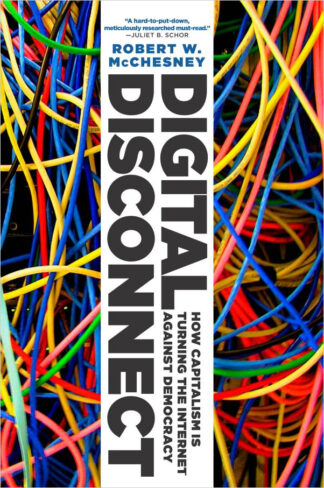
In this transcript of a talk from 2015, Robert W. McChesney discusses the "great definitional communication revolutions" that have shaped humanity's trajectory. Even a decade ago, McChesney was able to see the fraught relationship between new technology and democracy, the re-emergence of fascism, and the political dangers of the Digital Age.
December 1, 2025
Writing upon the fiftieth anniversary of his graduation from Pomfret School in Connecticut, Robert W. Chesney shares in his own words the story of his intellectual development, from his teen years through his studies at The Evergreen State College, and how they shaped his career as a journalist and activist—including his role as coeditor of
MR.
December 1, 2025
In this reprint of a
Seattle Weekly article from 2004, Knute Berger details a game of Monopoly played among friends, including Robert W. McChesney and John Bellamy Foster, while students at The Evergreen College. With sly insight, Berger shows how Foster and McChesney's antics as board game robber barons revealed McChesney's perceptive analysis of the media landscape under capitalism and his passionate advocacy for democratic, monopoly-free media.
November 1, 2025
In this far-reaching analysis, Vijay Prashad enumerates the conditions of the current conjuncture that, despite seemingly intractable capitalist and imperialist hegemony, point to a reinvigorated revolutionary consciousness among the global population. In a world of capitalist degradation, Prashad declares: "A politics to produce dignity is a socialist politics…. Capitalism inherently generates forms of inequality and indignity. Therefore, all undertakings that seek dignity for all are socialist projects."
November 1, 2025
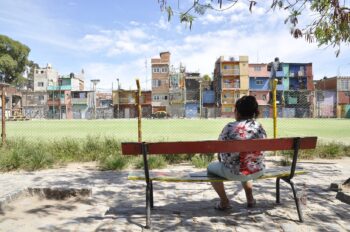
In a follow-up to their May 2024 article about the IMF'S vise-grip on Argentina's economy, David Barkin and Juan E. Santarcàngelo examine how recent events continue to shape the efforts of the global and domestic ruling classes to dominate Argentine society through debt, currency scams, and political malfeasance. Underlying all of this, they note, is the continued encroachment of the IMF on Argentina's sovereignty, aided and abetted by the far-right president Javier Milei.
November 1, 2025
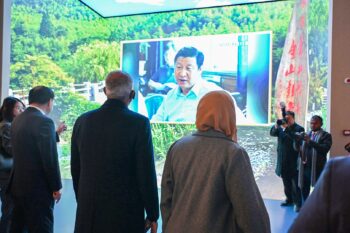
Helena Sheehan reflects on the evolution of her intellectual political relationship to China, a journey that began with limited knowledge of a seemingly far-away land and ends with a nuanced understanding grounded in her on-the-ground experiences as a visiting professor at Peking University. Through political and cultural analysis, Sheehan gives readers a peek into what how the Chinese Revolution continues to unfold.