April 1, 2026
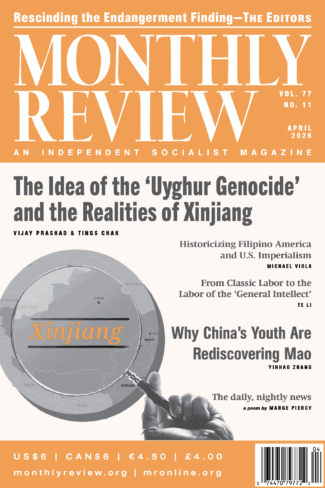
While the "world is rapidly approaching tipping points that spell irreversible and catastrophic climate change," write The Editors, "we are not seeing the necessary turn from ecological reform to ecological revolution, but rather the rise of ecological reaction.… An absolute no-quarters war from above is now being waged against all political attempts to address climate change." This attack is epitomized by "the Donald Trump administration's goal of removing the 2009 Endangerment Finding of the Clean Air Act that underlies all national climate legislation in the United States." While this tactic is unlikely to succeed, the proliferation of similar attacks clearly demonstrate that "[m]onopoly-finance capital has now abandoned the energy transition, which was its only answer to climate change."
March 1, 2026
"To make sense of present developments,"
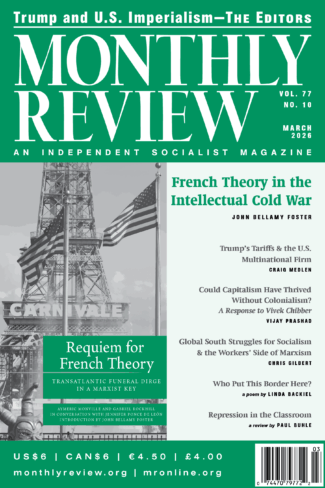
MR editors write in this month's "Notes from the Editors," "it is essential to understand the dialectic of continuity and change in U.S. imperial grand strategy." By charting the evolution from post-Second World War dominance to the collapse of the Soviet Union and the eventual demise of the "Unipolar Moment," the Editors tie the reactionary impulses of MAGA to the raw shows of imperial force driven by Trump's policies.
March 1, 2026
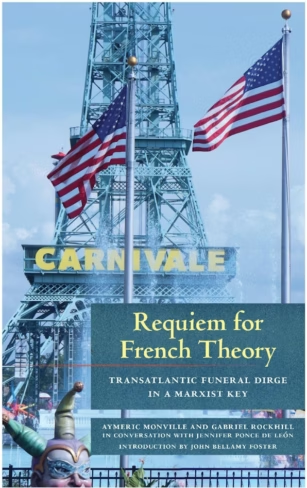
In 1966, Johns Hopkins hosted a seemingly innocuous international conference titled "The Languages of Criticism and the Sciences of Man," featuring leading figures of what would later be known as "French Theory." However, John Bellamy Foster writes, far from a simple meeting of intellectuals, this represented a "politically motivated attempt to create a beachhead for French structuralism in the United States that would counter the radicalization then taking place."
March 1, 2026
Karl Marx originally planned to complement
Capital with an additional work exploring capitalism from the side of the workers, which he never completed. In this article, Chris Gilbert argues that this projected "workers' side of Marxism" has a special relevance to the processes of anti-imperialist struggle in the Global South, explaining why they often turn to socialism despite underdeveloped productive forces and the relative scarcity of a classical proletariat.
March 1, 2026
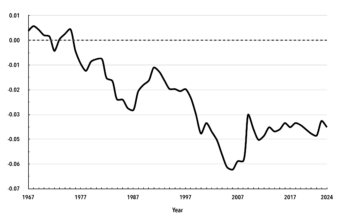
Craig Medlen dissects the logic behind the Trump administration's efforts to impose tariffs as a way to counteract "unfair" U.S. trade deficits. Situating these deficits in the longer history of U.S. trade hegemony and its crumbling position in the global economy, Medlen uses incontrovertible data to illustrate how mainstream economic orthodoxy fails to acknowledge the effects of foreign inputs that integral to the workings of U.S. monopoly capital.
March 1, 2026
A new poem by Linda Backiel.
March 1, 2026
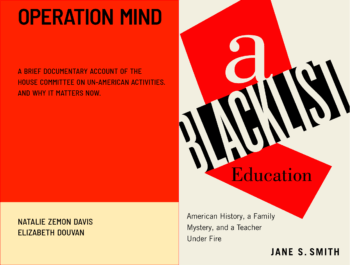
In this dual review, Paul Buhle lends contemporary context to the histories of McCarthyism found in the recently published
A Blacklist Education, by Jane S. Smith, and
Operation Mind, by Natalie Zemon Davis and Elizabeth Donovan. In these two books, Buhle writes, readers can find parallels with the was that is today being waged against university professors and students for political activities—a stark reminder that political witch-hunts did not end with Joe McCarthy.
February 1, 2026
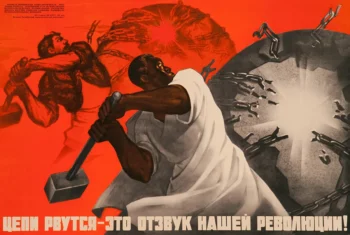
In this talk from the inaugural conference of the Society for Peace, Internationalism, and Ecology, John Bellamy Foster relates the story of Prometheus, as presented in the plays of Aeschylus, to Western Marxism's "dialectic of defeat," in which capitalism is portrayed as an unbreakable bond for the working class. Instead, Foster says, we must recognize Prometheus as a subject who is freed from the seemingly inescapable fetters imposed upon him.
February 1, 2026
Despite its relatively small size, Mauritius increasingly is looming large in the geopolitical jostling in the Indian Ocean region. Tracing the country's often overlooked role in global affairs from the sixteenth century up until the present day, Stefan Gua provides readers with an insightful account of how politics both inside and outside of Mauritius reflect broader debates about colonialism, militarism, and self-determination.